
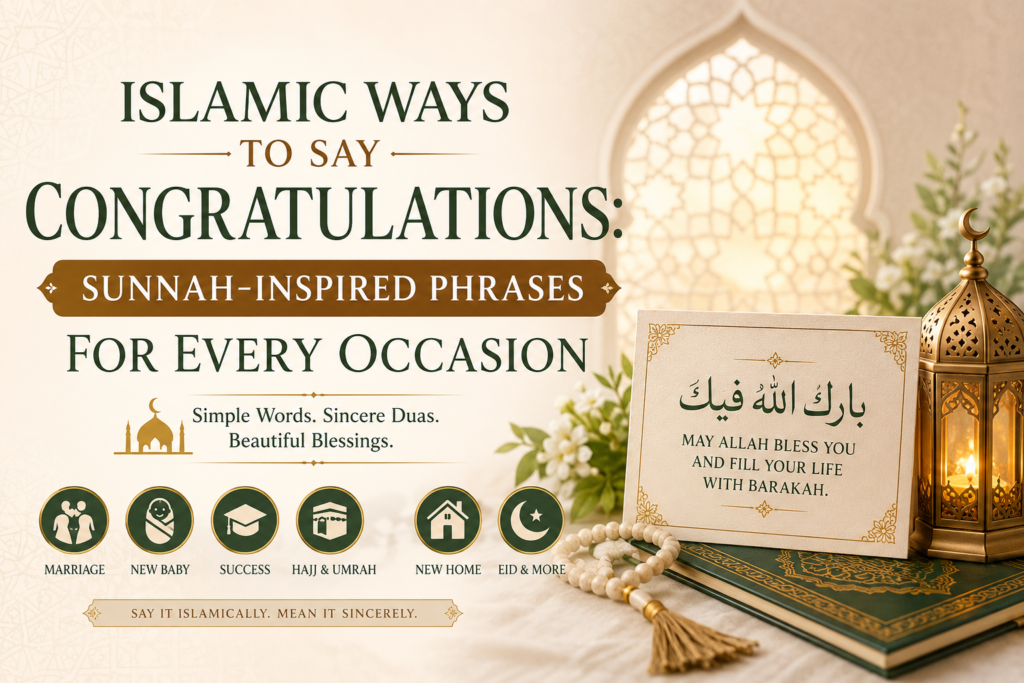
In Islam, expressing joy and goodwill towards others is not only a social courtesy but also a beautiful act encouraged in the Sunnah. Congratulating someone on their success, blessings, or milestones strengthens brotherhood, spreads love, and invites barakah (blessings) into relationships. The Prophet Muhammad ﷺ taught Muslims to be cheerful and supportive of one another’s happiness, using kind words and sincere prayers.
This article explores Islamic ways to say congratulations using Sunnah-inspired phrases for different life occasions, along with meaningful examples you can use in daily life.
The Importance of Congratulations in Islam
Islam places great emphasis on good manners (akhlaq) and kind speech. When a Muslim congratulates another, it is not just a casual message; it becomes a form of dua (supplication).
The Prophet ﷺ said:
“Whoever believes in Allah and the Last Day should speak good or remain silent.”
This principle encourages Muslims to use positive, uplifting words, especially during moments of happiness. Saying congratulations in Islam often includes a dua for barakah, guidance, and success in both dunya and akhirah.
General Sunnah-Inspired Congratulations Phrases
Before exploring specific occasions, here are some general Islamic congratulatory phrases:
- “Barakallahu laka” (May Allah bless you)
- “Mubarak lak” (Blessings to you)
- “Allahumma barik lahum” (O Allah, bless them)
- “May Allah increase you in goodness and success.”
- “May Allah make this blessing a source of khair for you.”
These phrases can be used in almost any situation where congratulations are appropriate.
Recommended: 50 Heartfelt Welcome Back from Umrah Wishes and Messages
Islamic Congratulations for Marriage (Nikah & Wedding)
Marriage is one of the most blessed occasions in Islam. The Sunnah encourages offering duas rather than only worldly wishes.
Common phrases include:
- “Barakallahu laka wa baraka ‘alayka wa jama’a baynakuma fi khayr.”
(May Allah bless you, shower His blessings upon you, and unite you both in goodness) - “Nikah Mubarak” (Blessed marriage)
- “May Allah fill your marriage with love, mercy, and barakah.”
Marriage wishes should always focus on stability, faith, and righteous companionship.
Congratulations on the birth of a Child
When a baby is born, Islam encourages expressing gratitude and making dua for the child’s righteousness.
You can say:
- “May Allah make the child among the righteous servants of Allah.”
- “Barakallahu lakum fil mawhub” (May Allah bless you in what He has given)
- “Congratulations on your beautiful blessing from Allah.”
It is also Sunnah to pray for the child’s good character, health, and iman.
Recommended: Safe Journey Wishes and Duas for Travelers in Islam
Islamic Graduation and Success Messages
Education and success are also blessings from Allah. When someone graduates or achieves a milestone, Muslims should remind them to remain humble.
Examples:
- “May Allah increase you in knowledge and wisdom.”
- “Congratulations! May your success be a means of khair for you and others.”
- “Barakallahu fik for your hard work and dedication”
Always combine appreciation with a reminder of gratitude to Allah.
Congratulations on Hajj or Umrah Completion
Completing Hajj or Umrah is a deeply spiritual achievement. Many Muslims also plan their journeys through services like umrah deals to make the sacred trip more accessible.
Islamic congratulations for pilgrims include:
- “Hajj Mabrur wa Sa’y Mashkur” (May your Hajj be accepted and your effort rewarded)
- “May Allah accept your pilgrimage and forgive your sins.”
- “Welcome back, purified like the day you were born.”
This is a moment where sincere duas are more important than simple greetings.
Islamic Wishes for New Job or Career Success
When someone starts a new job or receives a promotion, Islam teaches us to wish for halal earnings and barakah.
You can say:
- “May Allah bless your rizq and make it halal and pure.”
- “Congratulations! May this job bring you closer to goodness and stability.”
- “Barakallahu lak in your new opportunity”
Success should always be linked with gratitude and ethical earning.
Congratulations on your new home (Housewarming)
A new home is a significant blessing in Islam.
Islamic phrases include:
- “May Allah make your home filled with peace and barakah.”
- “May this house become a place of iman, love, and happiness.”
- “Barakallahu lakum fi baytikum”
Such messages emphasize spiritual comfort rather than material joy alone.
Congratulations on Reverting to Islam
When someone embraces Islam, it is one of the greatest blessings.
You may say:
- “Welcome to Islam, may Allah keep you steadfast.”
- “May Allah strengthen your iman and guide your heart always.”
- “Alhamdulillah, may your journey in Islam be full of peace and light.”
Support and encouragement are crucial for new Muslims.
Congratulations on Recovery from Illness
Health is a great blessing in Islam, and recovery deserves gratitude.
Examples:
- “Alhamdulillah for your recovery, may Allah keep you in good health.”
- “May Allah grant you complete shifa and strength.”
- “Barakallahu fik, stay blessed and healthy.”
Such words remind us that healing comes from Allah alone.
Eid and Religious Celebrations
Eid is a time of collective happiness and gratitude.
Common greetings:
- “Eid Mubarak, may Allah accept your worship.”
- “May Allah fill your Eid with joy and forgiveness.”
- “Taqabbal Allahu minna wa minkum” (May Allah accept from us and you)
These greetings strengthen unity in the Ummah.
Final Thoughts on Islamic Congratulations
In Islam, congratulating others is not just a formality; it is an act of kindness, dua, and love for fellow believers. Whether it is marriage, success, birth, spiritual achievement, or even progress in online quran teaching, every moment becomes meaningful when we remember Allah.
By using Sunnah-inspired phrases, we ensure our words carry blessings, sincerity, and reward in the Hereafter. A simple “Barakallahu fik” can transform a message into a source of barakah.